
We are Our Brains: From the Womb to Alzheimer's - Dick Swaab
- Dodał: administrator
- Data: 04:40 09-11-2018
- Kategoria: Popularnonaukowa
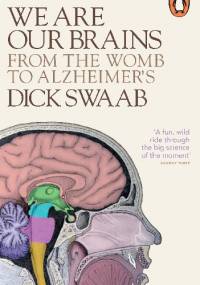
Based groundbreaking new research, We Are Our Brains is a sweeping biography of the human brain, from infancy to adulthood to old age. Renowned neuroscientist D. F. Swaab takes us on a guided tour of the intricate inner workings that determine our potential, our limitations, and our desires, with each chapter serving as an eye-opening window on a different stage of brain development: the gender differences that develop in the embryonic brain, what goes on in the heads of adolescents, how parenthood permanently changes the brain. Moving beyond pure biological understanding, Swaab presents a controversial and multilayered ethical argument surrounding the brain. Far from possessing true free will, Swaab argues, we have very little control over our everyday decisions, or who we will become, because our brains predetermine everything about us, long before we are born, from our moral character to our religious leanings to whom we fall in love with. And he challenges many of our prevailing assumptions about what makes us human, decoding the intricate “moral networks” that allow us to experience emotion, revealing maternal instinct to be the result of hormonal changes in the pregnant brain, and exploring the way that religious “imprinting” shapes the brain during childhood. Rife with memorable case studies, We Are Our Brains is already a bestselling international phenomenon. It aims to demystify the chemical and genetic workings of our most mysterious organ, in the process helping us to see who we are through an entirely new lens. źródło opisu: https://www.amazon.com/We-are-Our-Brains-Alzheimer...(?) źródło okładki: https://www.penguin.co.uk/books/255088/we-are-our-brains/
| ISBN | 0141978236 | ||
| data wydania | 29 stycznia 2015 | ||
| język | angielski | ||
| liczba stron | 448 | ||
| tytuł oryginału | We zijn ons brein | ||
| kategoria | popularnonaukowa |
Rejestracja jest za darmo i jest bardzo szybka! Kliknij tutaj aby założyć konto. Trwa to tylko 15 sekund!.
Podobne wpisy do We are Our Brains: From the Womb to Alzheimer's - Dick Swaab

Kojak: 50 Seconds of Television Music. Towards the Analysis of Affect in Popular Music - Philip Tagg
By 1976 the title theme for the TV series Kojak had been heard by at least 100 million people in at least seventy countries. It is an infinitesimal part of all the mass media music outside the traditional musicological frames of reference. Tagg argue...

Peter Gabriel. Global Citizen - Paul Hegarty
Peter Gabriel is one of contemporary music’s great experimenters. From his work in the progressive group Genesis, through his pioneering solo albums, to his enthusiastic embrace of world music and new technologies, Gabriel has remained steadfastly co...

Capitalist Realism: Is There No Alternative? - Mark Fisher
It is easier to imagine the end of the world than the end of capitalism. After 1989, capitalism has successfully presented itself as the only realistic political-economic system - a situation that the bank crisis of 2008, far from ending, actually co...

Harvest for Hope. A Guide to Mindful Eating
The renowned scientist who fundamentally changed the way we view primates and our relationship with the animal kingdom now turns her attention to an incredibly important and deeply personal issue-taking a stand for a more sustainable world. In this p...

The Purity Myth: How America's Obsession with Virginity is Hurting Young Women - Jessica Valenti
The United States is obsessed with virginity , from the media to schools to government agencies. In The Purity Myth, Jessica Valenti argues that the country's intense focus on chastity is damaging to young women. Through in-depth cultural and social...
Man the Hunted. Primates, Predators, and Human Evolution - Donna Hart, Robert W. Sussman
Man the Hunted argues that primates, including the earliest members of the human family, have evolved as the prey of any number of predators, including wild cats and dogs, hyenas, snakes, crocodiles, and even birds. The authors’ studies of predators...