
The Tale of the Bamboo Cutter - Yasunari Kawabata
- Dodał: administrator
- Data: 21:13 08-11-2018
- Kategoria: Klasyka
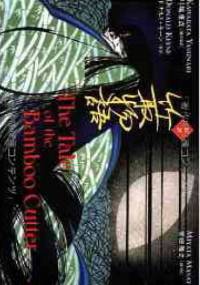
Preface by Donald Keene Taketori Monogatari (The Tale of the Bamboo Cutter) was probably written late in the ninth or early in the tenth century. Mention at the end of the tale that smoke still rose from Mount Fuji, a sign it was an active volcano, is an important clue to the date of composition, for we know that by 905 A.D. the mountain had ceased to emit smoke. Regardless of exactly when the tale was first set down on paper, it is the oldest surviving Japanese work of fiction; The Tale of Genji (written about 1010) referred to it as the "ancestor of all romances." Many theories have been published about the authorship, but they are little more than guesses. The names of five suitors, resembling those of members of the Japanese court of the eighth century, have suggested to some scholars that the The Tale of the Bamboo Cutter was conceived of as a satire directed against a certain court faction, but this is not how the work was read in later centuries. Today it is thought of mainly as a children's story, and Kaguya-hime, the heroine, looks in the illustrations as lovable as Snow-White or Cinderella; there is no suggestions of the heartlessness that is perhaps her most memorable feature Elements in the narrative recall similar tales from other parts of the world. The tests to which the suitors are subjected resemble the riddles asked by the icy Princess Turandot, or we may recall the three caskets among which the suitors had to choose in The Merchant of Venice. Perhaps the most interesting aspect of the tests Kaguya-hime imposes is the humor with which they are related. The second suitor's lyrical description of the magical island of Horai, where he allegedly found the jeweled branch, is interrupted by the mundane demands of the artisans who actually made it. Again, the fourth suitor, at the end of his unsuccessful quest, urges his men to stay away from the vicinity of the house of "that thief of a Kaguya-hime." Such a characterization of the heroine takes us from the realm of the children's story. Many texts of The Tale of the Bamboo Cutter have come down, each with its share of variant. The names of the characters differ somewhat from text to text or even within the same text. The differences are not confined to names: towards the end, when the old man is attempting to prevent Kaguya-hime from being taken off to the moon, he urges his men to shoot anything they see in the sky, no matter how small, and they assure him that they will shoot down "even a mosquito." But other texts mention not a mosquito but a bat; perhaps some scribe thought it was a bit too farfetched for anyone to shoot down a mosquito, and changed the word to a larger flying object. There are other problems in the text. Near the beginning the Bamboo Cutter says of himself that he is over seventy years old, but towards the end (twenty years later) we are told that he has just turned fifty. It seems likely that there was a copyist's error, but some scholars, taking the figure given at the end as the Bamboo cutter's real age, have suggested that twenty years earlier, when he was only thirty, he may have been one of the suitors for Kaguya-hime's hand. Such problems in the text should not, however, prevent us from enjoying the storyteller's art. About thirty-five years ago I first published a translation of The Tales of the Bamboo Cutter in the journal Monumenta Nipponica. A few years later-in the summer of 1965-a Japanese publisher conceived the plan of a book that would incorporate my translation, the translation into modern Japanese by the great novelist Yasunari Kawabata, and illustrations by one of the outstanding contemporary Japanese painters. I decided to take advantage of the opportunity to revise my translation. About this time, I visited an exhibition of kirie (paper-cut pictures) by Masayuki Miyata, and discovered that he had actually completed series of works illustrating The Tale if the Bamboo Cutter. I was delighted that at last it would be possible to realize the project first conceived so many years before. There were still further delays, but at last the book has materialized. It combines the work of unknown Japanese writer of over a thousand years ago, the translation by a master of modem Japanese, illustrations by an outstanding artist, and a translation by an American who has devoted his life to the study of Japanese literature. Illustrator Masayuki Miyata źródło opisu: Kodansha International, 1998
| ISBN | 4770023294 | ||
| język | angielski | ||
| tytuł oryginału | 竹取物語, Taketori Monogatari | ||
| kategoria | klasyka | ||
| data wydania | 1998 (data przybliżona) | ||
| słowa kluczowe | Donald Keene, Masayuki Miyata | ||
| liczba stron | 180 |
Rejestracja jest za darmo i jest bardzo szybka! Kliknij tutaj aby założyć konto. Trwa to tylko 15 sekund!.
Podobne wpisy do The Tale of the Bamboo Cutter - Yasunari Kawabata
Warriors: The New Prophecy #5: Twilight - Erin Hunter
Before there is peace, blood will spill blood... New territory brings new troubles for the fierce cats of the warrior Clans, who are still uncovering the secrets of their new home around the lake. Dangers they have never faced before are lurking in t...
A Tolkien Treasury - praca zbiorowa
With poems, stories, and songs from an international community of writers, scholars, and artists, "A Tolkien Treasury" is the perfect gift for every Tolkien fan. Get a glimpse of Middle-Earth in this beautifully illustrated celebration of the author...

How to Archer: The Ultimate Guide to Espionage and Style and Women and Also Cocktails Ever Written - Sterling Malory Archer
Hi. I see you’re reading the back of my book. This tells me that you either: A) are hoping to find a brief summary of what to expect from a how-to book by Sterling Archer, the world’s greatest secret agent, or B) don’t know how books work. If your an...

Crenshaw - Katherine Alice Applegate
In her first novel since "The One and Only Ivan", winner of the Newbery Medal, Katherine Applegate delivers an unforgettable and magical story about family, friendship, and resilience. Jackson and his family have fallen on hard times. There's no more...
The Walking Dead: Invasion - Robert Kirkman, Jay Bonansinga
Out of the ashes of a devastated Woodbury, Georgia, two opposing camps of ragtag survivors develop - each one on a collision course with the other. Underground, in the labyrinth of ancient tunnels and mine shafts, Lilly Caul and her motley crew of se...
The Essays of Warren Buffett : Lessons for Corporate America - Warren Edward Buffett, Lawrence Cunningham
Buffett, the Bard of Omaha, is a genuine American folk hero, if folk heroes are allowed to build fortunes worth upward of $15 billion. He s great at homespun metaphor, but behind those catchy phrases is a reservoir of financial acumen that s generall...