
Selected Medieval and Religious Themes in the Works of C.S. Lewis and J.R.R. Tolkien - Wicher Andrzej
- Dodał: administrator
- Data: 16:12 17-11-2018
- Kategoria: Językoznawstwo, nauka o literaturze

Preface (fragment) It is perhaps trivial to say that the personalities and works of J. R. R. Tol kien and C. S. Lewis evoke rather extreme feelings in audiences. Sometimes these emotions are those of deep admiration and fascination, and sometimes, though much less often, those of disgust or even contempt.1 It is, however, easy to see that sometimes they hardly incite any feelings at all because it certainly is not true that one must feel strongly about these two famous and popular, but hardly canonical English writers, who happened to be friends and to have shared much of their life experiences together. As writers, they both can be described as providers of niche products, interesting for fantasy literature buffs and, particularly in the case of C. S. Lewis, for Christians, particularly committed Christians. The latter once were a majority of the Western consumers of culture, but, already in the days of Tolkien and Lewis, they became, at least in Britain and in many other places in the West, something of an embattled minority. At that time, the majority of the population consisted of people with hardly any religion, or of lukewarm Christians. If we try to ask ourselves why Tolkien and Lewis are, occasionally, so much disliked and shunned, we might end up with some rather obvious answers. They certainly are seen as profoundly old-fashioned, or even reactionary, since they hardly belong to the epoch of the 20th century Modernism (or Post-Modernism) with which they seem to be associated purely by a chronological coincidence. Indeed both yearned for rather distant epochs, and heartily disliked the modern i????ndustrial and technological civilisation. On the other hand, it is also possible that sometimes both Tolkien and Lewis exaggerated the extent of their own conservatism, while being aware that this manoeuvre may have cost them a lot in terms of popular support. In one of his most famous texts, the lecture called De Descriptione Temporum, Lewis talks about how great an experience it would have been for a paleontologist to meet a live dinosaur, or for a student of Classical Greek drama to meet a live Athenian from the times of Sophocles. The point is that he defi nes himself as an old Western man, that is a specimen of the cultural formation that disappeared, according to him, around the year 1820, with the onset of the age dominated by science and machinery. He mentions Jane Austen and Sir Walter Scott as some of the last representatives of this Old Western culture: Ladies and gentlemen, I stand before you somewhat as that Athenian might stand. I read as a native texts that you must read as foreigners. You see why I said that the claim was not really arrogant; who can be proud of speaking fl uently his mother tongue or knowing his way about his fathers house? It is my settled conviction that in order to read Old Western literature aright you must suspend most of the responses and unlearn most of the habits you have acquired in reading modem literature. And because this is the judgement of a native, I claim that, even if the defence of my conviction is weak, the fact of my conviction is a historical datum to which you should give full weight. That way, where I fail as a critic, I may yet be useful as a specimen. I would even dare to go further. Speaking not only for myself but for all other Old Western men whom you may meet, I would say, use your specimens while you can. There are not going to be many more dinosaurs.2 Thus, Lewis consciously represented himself as old-fashioned in quite a literal sense of the word, that is as somebody whose mind was fashioned a long time ago, or rather fashioned by cultural products of what he calls Old Western age. Naturally, we have the right to treat this dinosaur rhetoric with a pinch of salt, because there may be in it an admixture of the natural desire of a middle-aged professor to appear more interesting in the eyes of the students, or even in his own eyes, but, on the other hand, there is little doubt that C. S. Lewis was steeped in old literary texts in quite an amazing degree. He was not, at the same time, what one might call a natural dinosaur because his love of old literature can more rightly be called an acquired taste rather than a continuation of a family tradition. źródło opisu: Helion źródło okładki: Helion
| ISBN | 9788360655719 | ||
| kategoria | językoznawstwo, nauka o literaturze | ||
| data wydania | 14 grudnia 2015 | ||
| język | polski |
Rejestracja jest za darmo i jest bardzo szybka! Kliknij tutaj aby założyć konto. Trwa to tylko 15 sekund!.
Podobne wpisy do Selected Medieval and Religious Themes in the Works of C.S. Lewis and J.R.R. Tolkien - Wicher Andrzej

Byłam żoną seryjnego mordercy - Cathy Wilson
Cathy miała szesnaście lat i zaczynała samodzielne życie, kiedy spotkała czarującego, starszego o kilkanaście lat Petera Tobina. Widziała w nim rycerza w lśniącej zbroi, mężczyznę, który sprawi, że wreszcie poczuje się bezpieczna. On widział w niej b...

Stuff White People Like - Christian Lander
They love nothing better than sipping free-trade gourmet coffee, leafing through the Sunday New York Times, and listening to David Sedaris on NPR (ideally all at the same time). Apple products, indie music, food co-ops, and vintage T-shirts make them...
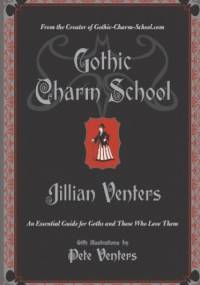
Gothic Charm School - Jillian Venters
Question the Second: Who is this book for? Answer: The Lady of the Manners’ short answer for that is “Everyone!” And really, the book is for everyone. For Goths who’ve been wearing black and lurking in the shadows for decades, for babybats and gothli...
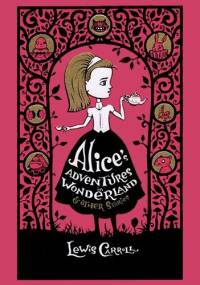
Alice's Adventures in Wonderland and Other Stories - Lewis Carroll
Everything that Lewis Carroll ever published in book form appears in this volume. In addition, at least ten of the shorter pieces have never appeared in print except in their original editions. Included are: "Alice's Adventures in Wonderland" "Throug...
Technical Examination of Documents within the Scope of Polish Evidence Law - Rafał Cieśla
Dr. Rafał Cieśla works at the Department of Forensic Science, Faculty of Law, Administration and Economics, University of Wrocław. His academic interests focus on the issue of examination of documents. In this study the author presents the issues of...
Practice and Progress - L.G. Alexander
This important new course leads the adult and secondary school student who is an absolute beginner to fluent English through four integrated books. Each of the four books can, however, be used independently of the others and can indeed be entered at...